
Symmetry
The flat-feature counterpart of concentricity, and it carries the same objections — including the one about there usually being a better control.
What it controls
Symmetry limits how far the median points of a feature may sit from a datum median plane. A slot that is cut evenly either side of the centre satisfies it; one pushed to one side does not.
As with concentricity, the control is about median points rather than surfaces, which makes it precise about the right thing and demanding to verify.
The tolerance zone
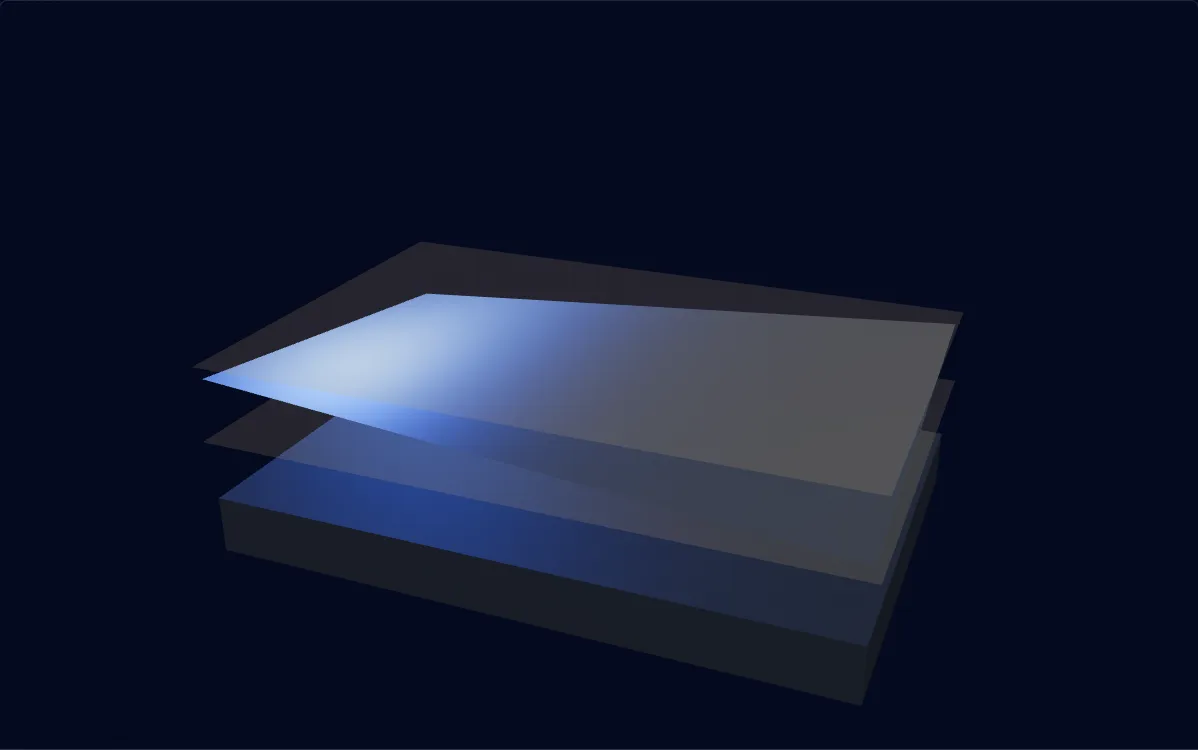
Two parallel planes the stated distance apart, arranged symmetrically about the datum median plane. Every median point of the feature has to lie between them.
Try it in 3D
Within tolerance
Drag to exaggerate the deviation. The part is shown far out of scale so the zone stays visible.
Reading the callout
The median points of this slot have to lie between two planes 0.05 mm apart, spaced evenly either side of the median plane of datum A.
When to reach for it
- A slot or tongue that has to sit centrally in a part for the loading to be even.
- A feature where equal wall thickness on both sides is the actual requirement.
- Existing drawings that already carry it, where the question is what it demands rather than whether to write it.
How it is measured
- Opposed points are measured on both faces of the feature and their midpoints computed, then compared with the datum median plane.
- The datum median plane is itself derived from the datum feature, so that feature needs to be well enough controlled to be worth deriving from.
- Several sections along the feature are checked, since the requirement applies over its whole length.
Getting it right
- Consider a position tolerance applied to the width, which controls the same thing in most cases, is understood everywhere and is far quicker to verify.
- Give the datum feature its own form control where the median plane derived from it has to mean something.
- Note the intent on the drawing when symmetry genuinely is wanted, since a supplier used to ASME drawings may not expect to see it.
Common questions
Symmetry or position on the width?
Position in most cases. Applied to a width, a position tolerance locates the median plane of the feature relative to the datums and does it with a control every supplier reads fluently and every CMM reports directly. Symmetry says something slightly different, in terms of median points, and costs more to verify for a difference that rarely matters in practice.
What exactly does the zone contain?
Median points, not surfaces. For each pair of opposed points on the two faces of the feature, the midpoint has to fall between the two planes of the zone. A slot whose faces are both bowed outward can still be perfectly symmetric, because the midpoints stay centred even though neither surface is flat.
Is symmetry still in the standards?
In ISO 1101, yes. ASME Y14.5 removed it in 2018 alongside concentricity, for the same reason: position covered the cases it was being used for, and it was often applied where position was meant. An ISO drawing carrying symmetry is perfectly correct; a drawing to the current ASME revision would use position instead.
How is the datum median plane established?
From the datum feature, in the same way the feature being controlled is treated: opposed points on the datum width are measured and their midpoints define the plane. That is why the datum feature deserves a size tolerance and often a form tolerance of its own — everything measured against the derived plane inherits whatever error it has.
These pages explain the published standards for reference and describe the tolerance zones they define. The values shown in the examples are illustrative. What a given part can hold depends on its geometry, material and process, and is agreed per drawing.